A blinking light on your ductless heat pump is the unit’s way of telling you something. Sometimes it’s routine, like a winter defrost cycle. Other times it’s a fault the system has detected and stored as a code. This guide explains what mini split error codes and blinking lights usually mean, how to read the code on the most common brands we service in Maine, and when it’s time to call for repair.
Is a Blinking Light Always a Problem?
No. Before assuming the worst, rule out the normal reasons a light changes:
- Defrost in cold weather. When it’s cold and damp, the outdoor coil builds up frost. The system periodically reverses to melt it off. During defrost the indoor unit may stop blowing warm air for several minutes, and on some models an indicator light changes. Heat comes back on its own once defrost ends.
- Timer or mode lights. Many indoor units have separate lights for timer, economy or quiet modes. A steady light in one of these is a setting, not a fault.
- A dirty filter reminder. Some models light up or blink to say the filters need cleaning.
- After a power outage. A brief outage or a flicker during a storm can leave a light blinking until the system restarts normally.
If the unit has stopped heating or cooling and the light keeps blinking in a repeating pattern, that’s a fault code.
What Mini Split Error Codes Mean
When a mini split detects a problem, it stops or limits operation to protect itself and stores a code that points to the part of the system involved. Codes generally fall into a few groups:
- Sensor faults: a temperature sensor (thermistor) on the indoor or outdoor unit is reading out of range or has failed.
- Communication errors: the indoor and outdoor units aren’t talking to each other. This is often a wiring, connection or power issue between the two units.
- Drain or condensate faults: water isn’t draining from the indoor unit, often a clogged drain line or a failed condensate pump.
- Fan motor faults: the indoor or outdoor fan isn’t spinning at the right speed.
- Refrigerant or pressure faults: the system is low on refrigerant or pressures are out of range, usually from a leak.
- Compressor or inverter board faults: problems in the outdoor unit’s electronics or compressor.
The code tells you where to look, not always what failed. A communication error, for example, can be a loose wire, a bad board or a power problem.
How to Read the Code on Your Unit
Every brand shows codes differently, and codes vary by model, so always match the code to your owner’s manual.
Daikin
On many Daikin wall units you can display the code with the wireless remote. Point the remote at the indoor unit and press and hold the timer cancel button for about 5 seconds. The remote’s temperature display switches to the error code, with a long beep. Hold the button again for 5 seconds to clear the display, or it clears on its own after about a minute. Remote models differ, so check the manual for yours.
Mitsubishi
Mitsubishi wall units signal faults by blinking the operation indicator lamp in a repeating pattern, often with a beep. The pattern points to the indoor or outdoor unit. Count the blinks over at least two full cycles and write the number down. Reading the outdoor-unit pattern uses a service mode, so leave that step to your technician.
Other brands (Bosch, MRCOOL, Fujitsu, LG and others)
Most either show a code on the remote or wired controller, or blink a light in a pattern. Check the troubleshooting section of your owner’s manual. Most manufacturers also post manuals on their website by model number, which is printed on a label on the side of the indoor unit.
Whatever the brand, before you call:
- Write down the code or count the blinks.
- Take a short phone video of the blinking light.
- Note the model number from the indoor unit’s label.
- Note what the unit was doing: no heat, short cycling, leaking water, unusual noise.
That information often lets us bring the right part on the first visit.
A Recent Repair
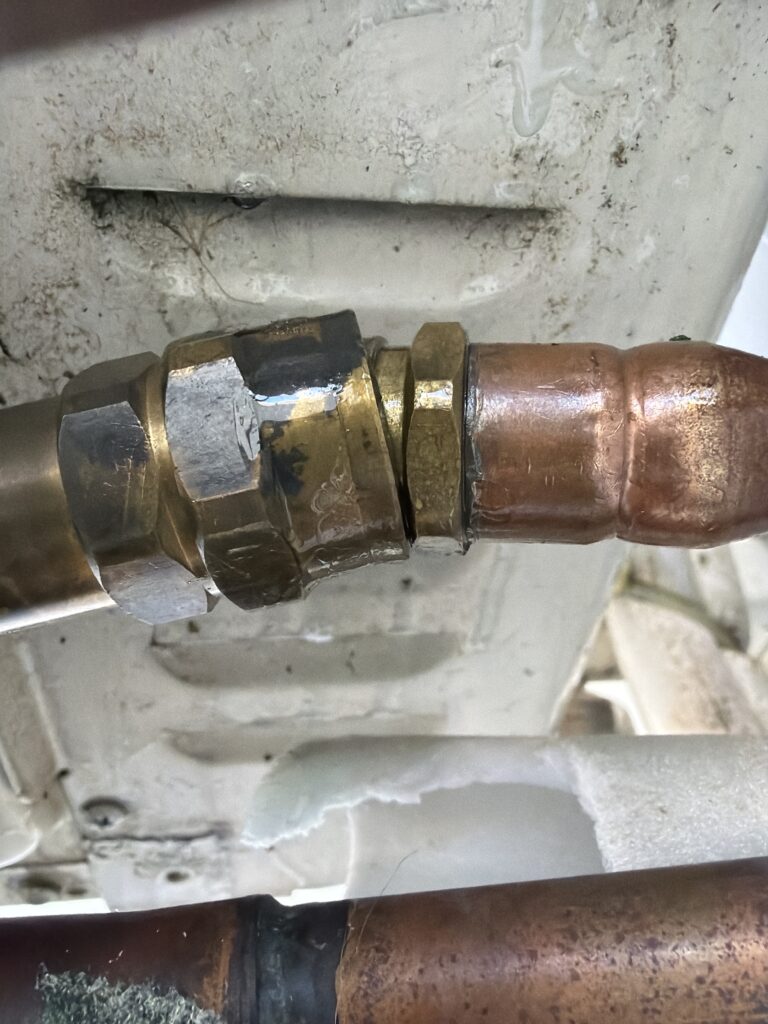
A homeowner in Richmond called because their MRCOOL mini split stopped heating and the light was blinking. The code pointed to low refrigerant pressure. We found a cracked flare fitting at the outdoor unit, replaced it, pressure-tested the lines and recharged the system.
Safe Things to Check Yourself
- Clean the filters. Lift the front cover of the indoor unit, slide out the mesh filters, rinse them, let them dry and slide them back in.
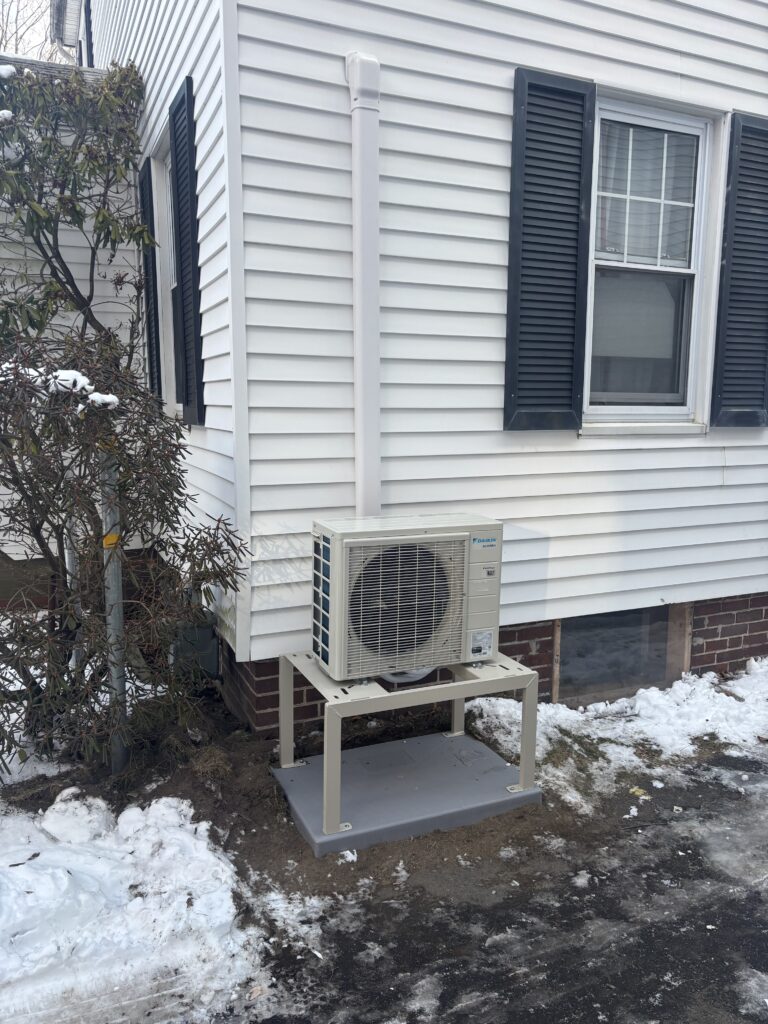
- Clear the outdoor unit. In a Maine winter, make sure snow and ice aren’t blocking the coil or burying the unit, and that roof runoff isn’t dripping onto it. Clear snow by hand or with a broom; don’t chip at ice with a tool.
- Restart the system once. Turn the unit off with the remote, switch off its breaker or outdoor disconnect for a few minutes, then turn it back on. If the code was caused by a power blip, it may clear.
- Look for water. Water dripping from the indoor unit usually points to a drain problem.
Don’t open the indoor or outdoor unit panels, spray water on the electronics, or keep resetting a code that comes back. A code that returns after a restart is the system telling you something is still wrong.
When to Call for Repair
Call a technician if:
- The same code comes back after a restart
- The unit isn’t heating during cold weather, and it’s not a defrost cycle
- The outdoor unit is iced over solid and stays that way
- Water is leaking from the indoor unit
- You smell burning or hear grinding or buzzing
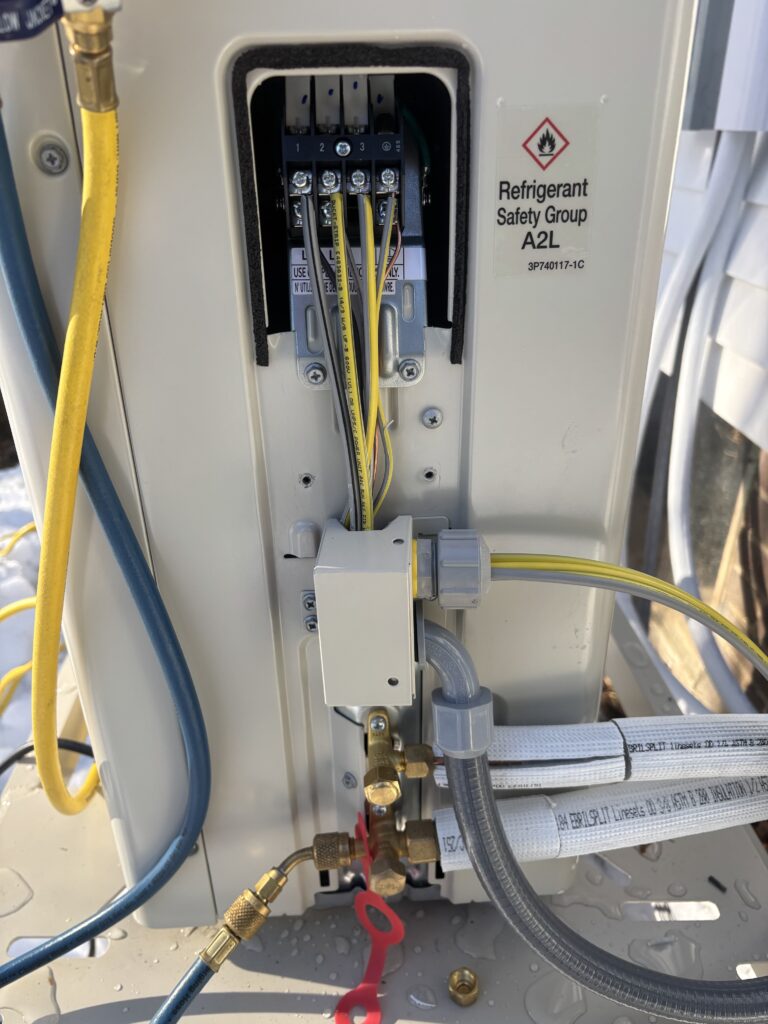
Many mini split problems trace back to dirty coils, clogged drains or connections that loosen over time. Regular heat pump maintenance catches most of these before they turn into a no-heat call in January. A BANN heat pump service plan puts that maintenance on a schedule.
Mini Split Error Code FAQ
Can I clear a mini split error code myself?
Often a restart clears the code from the display. But if the problem behind it is still there, the code will come back. A code that keeps returning needs a technician.
Why is my mini split blinking but still running?
Some lights blink for normal reasons, like defrost, a timer setting or a filter reminder. If the unit is heating or cooling normally, check your manual for what that light means before assuming a fault.
Are error codes the same on every mini split?
No. Codes differ by brand and often by model. Always look up the code in the manual for your specific unit.
Do you repair brands you didn’t install?
Yes. Most of the repairs we do are on Daikin and Bosch systems, and we also service MRCOOL and other brands. Call with the model number from the indoor unit’s label and we’ll let you know if we can help.
Need Help With a Blinking Mini Split?
If your ductless heat pump is showing an error code or has stopped heating, BANN diagnoses and repairs mini splits across Southern and Midcoast Maine.
Heat Pump RepairCall 207-406-3918Sources: Steps for reading codes were checked against manufacturer owner’s manuals, including a Daikin ARC447A remote manual and a Mitsubishi MSZ-EF series owner’s manual. Codes and procedures vary by model; always confirm with the manual for your unit.