When a winter storm knocks out power for two or three days, a generator stops being a nice idea. But plugging a portable generator into your house the wrong way is dangerous, both for you and for the line workers trying to restore power. There are three safe ways to power your home from a generator: an interlock kit, a transfer switch, or a standby generator. Here’s how each works and which one makes sense for most Maine homes.
Why You Can’t Just Plug a Generator Into an Outlet
Some people use a “suicide cord” with two male plugs to push generator power into a wall outlet. Don’t. It can send power back out onto the utility lines (called back-feeding), where it can injure or kill a line worker. It can also overload the circuit, start a fire, or damage the generator when the grid power comes back on. Every safe option below exists to stop back-feeding.
Option 1: Generator Interlock Kit
An interlock is a small metal plate mounted on your electrical panel. It makes it physically impossible to have the main breaker and the generator breaker on at the same time. A power inlet box goes on the outside of the house, and you run a heavy-duty cord from your portable generator to that inlet.
- How you use it: during an outage, turn off the main breaker, slide the interlock, turn on the generator breaker, then turn on the circuits you want to power.
- What it powers: any circuit in your panel, as long as the total load stays within your generator’s capacity. Most people pick the heating system, fridge, freezer, a few lights, outlets and their water.
- Why people choose it: it’s usually the simplest and least expensive safe setup, and it gives you flexibility to choose circuits on the fly.
Option 2: Manual Transfer Switch
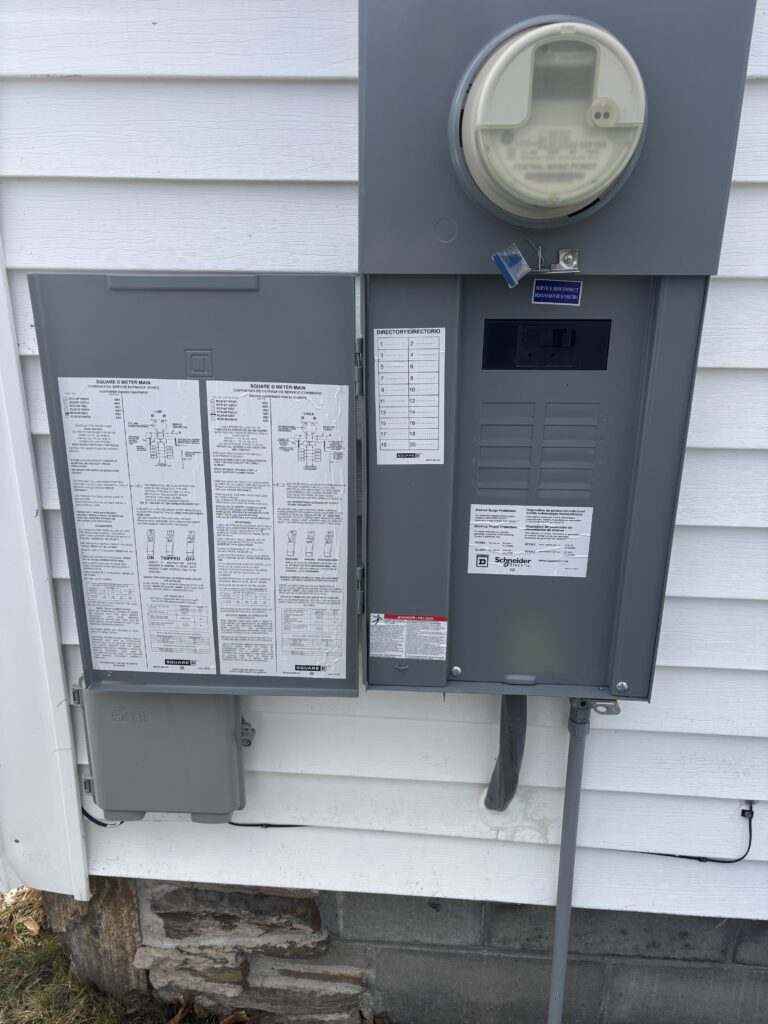
A manual transfer switch is a separate small panel installed next to your main panel. A set of pre-selected circuits is moved into it, and each has a switch for “line” or “generator.”
- How you use it: plug in the generator, then flip the selected circuits over to generator power.
- What it powers: only the circuits wired into the switch, usually 6 to 10 of them.
- Why people choose it: it’s simple to operate, and some people prefer not to touch the main panel during an outage. The trade-off is that you can’t power a circuit you didn’t plan for.
Option 3: Standby Generator With an Automatic Transfer Switch
A standby generator is a permanently installed unit, usually running on propane or natural gas, that starts by itself when the power goes out. An automatic transfer switch senses the outage, starts the generator and moves your home onto generator power within seconds.
- How you use it: you don’t. It runs itself and switches back when grid power returns.
- What it powers: selected circuits or the whole home, depending on the generator size.
- Why people choose it: it’s the hands-off option, which matters if you travel, have medical equipment, or own a second home that sits empty in winter.
BANN doesn’t sell or service generators. If you’ve already bought a standby generator, we can do the electrical hookup, including the transfer switch wiring.

Which One Is Right for You?
- You already own a portable generator and lose power a few times a year: an interlock kit and inlet is usually the best value.
- You want a short list of circuits and a very simple switchover: a manual transfer switch works well.
- You’re away often, need power without being home, or can’t easily run a generator yourself: a standby generator with an automatic transfer switch.
Sizing: What Can a Portable Generator Run?
Add up what you want running at the same time. A fridge, a freezer, a few lights and a furnace or boiler blower are often manageable on a mid-size portable generator. Electric water heaters, electric ranges, dryers and well pumps draw much more, especially when motors start. Check the running and starting wattage on your generator and your appliances, and plan to run big loads one at a time. Heat pumps vary a lot by model; ask us before counting on a generator to run one.
Running a Generator Safely
- Run it outside, well away from doors, windows and vents. Never in a garage, even with the door open. Carbon monoxide kills.
- Have working carbon monoxide detectors inside the house.
- Let it cool before refueling, and store fuel away from the house.
- Use a cord rated for your generator and inlet, and keep the connection dry.
Permits and Inspections in Maine
Connecting a generator to your home’s wiring is electrical work that usually needs a permit and an inspection. Depending on your town, the permit comes from the town or the State of Maine. A licensed electrician should handle the install and the permit.
Generator Hookup FAQ
Is a generator interlock legal in Maine?
Yes, when it’s a listed interlock kit made for your panel and installed by a licensed electrician with any required permit. It’s one of the most common ways to connect a portable generator safely.
Can I use a generator interlock with any panel?
Interlock kits are made for specific panel brands and models. Some older panels don’t have a compatible kit, and a transfer switch or panel replacement may be the better option.
Do I need a transfer switch for a standby generator?
Yes. A standby generator connects through an automatic transfer switch, which starts the generator and moves your home onto generator power when the grid goes down.
Does BANN sell generators?
No. We don’t sell or service generators. We install interlock kits, inlets and transfer switches, and we can do the electrical hookup for a standby generator you’ve already bought.
How long does an interlock install take?
Most interlock and inlet installs are done in a single visit. The exact time depends on your panel and how far the inlet is from it.
Ready Before the Next Outage?
BANN installs generator interlocks, inlets and transfer switches across Southern and Midcoast Maine. Tell us about your panel and generator and we’ll give you a clear price.
Generator HookupsCall 207-406-3918